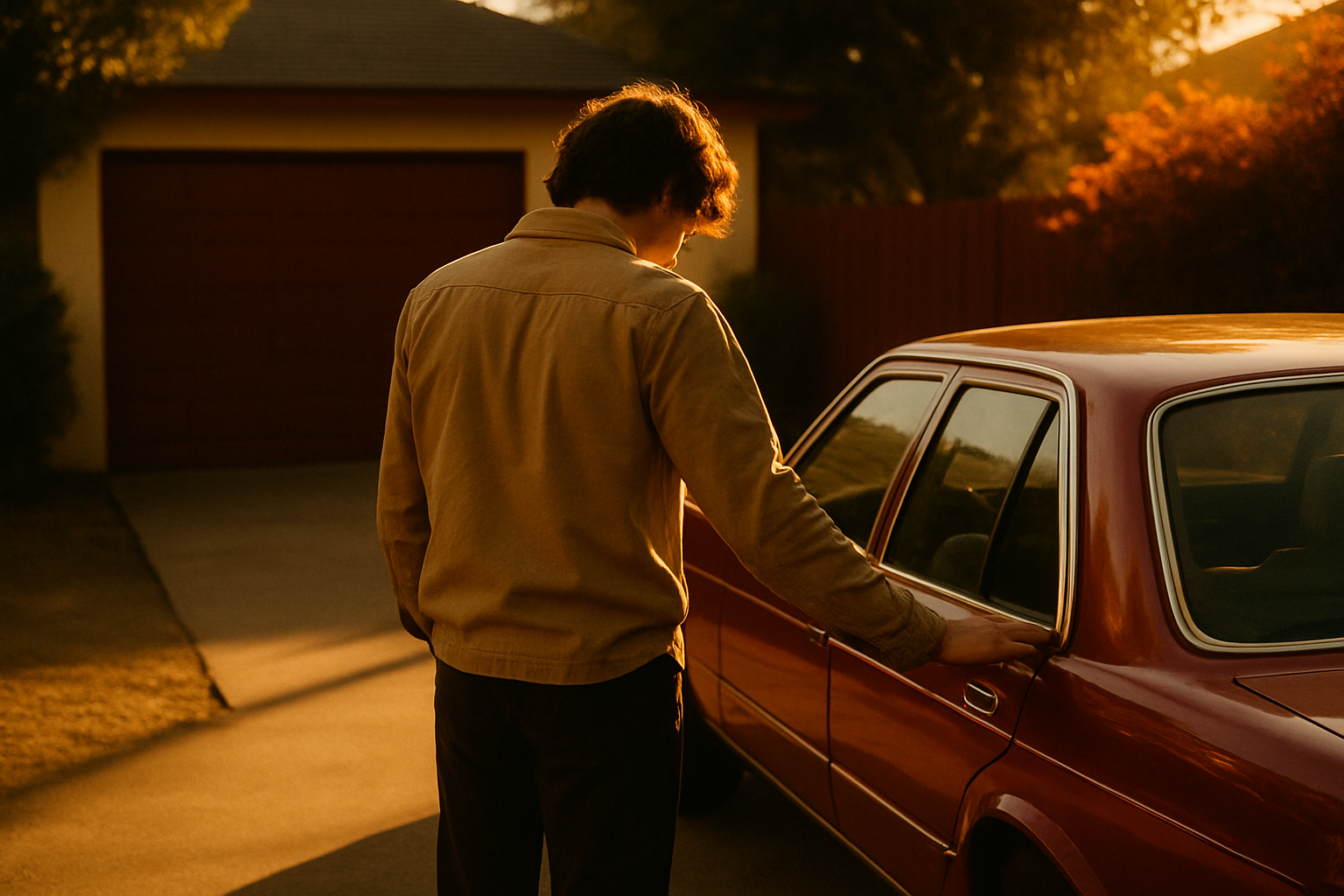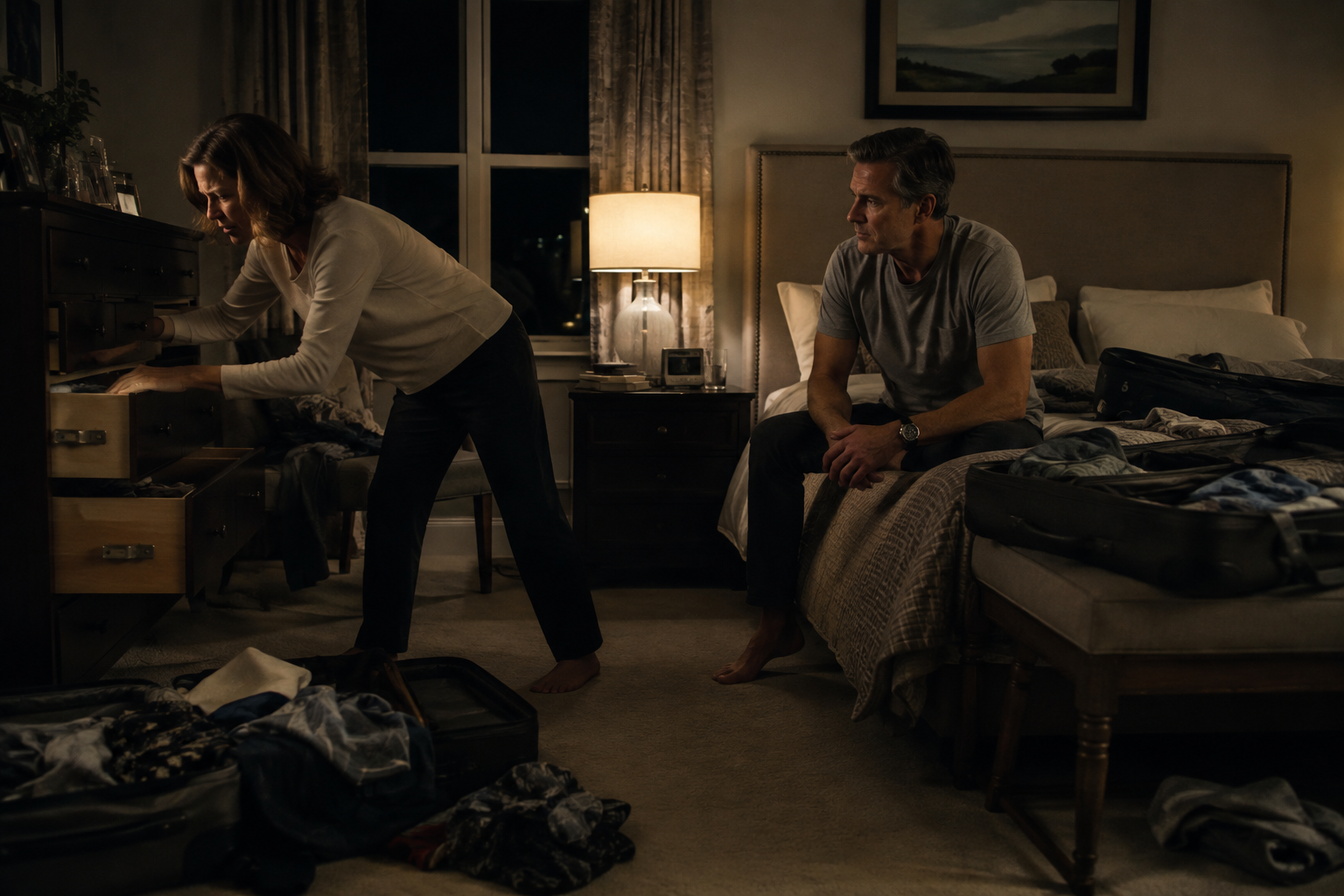
It's way past your bedtime. You're standing in the middle of the living room turning over couch cushions, and your flight leaves in five hours. Your passport is somewhere in this house. You put it somewhere safe, which is exactly why it's gone.
Your partner is twenty feet away. And you'd still rather tear the place apart alone than say the four words that would actually fix this: I need your help.
We ran a version of this scene on one of our live calls recently. Two people played out the frantic passport search, and the ask worked. Nobody got defensive, and the hunt turned into a team effort in under a minute. Afterward we broke down exactly why it worked, and every piece of it applies to money conversations and everything else you avoid bringing up.
Why we'd rather struggle alone
Most of us carry an old story that asking for help means we're weak or about to owe somebody. Inside a marriage that story gets more loaded. If I ask and you say no, my brain wants to make it mean something is wrong about us.
So we don't ask. We sigh loudly from the other room and hope our partner develops telepathy. Then we feel resentful when they don't, which is a wild thing to resent someone for.
The couples we work with who feel closest to each other ask constantly. Small asks and big ones, even the awkward kind. Asking often is what keeps any single ask from feeling like a crisis.
Start with what's happening inside you
Your partner can't see your inner state. You know you're frantic about the passport. All they see is you slamming drawers.
So before you ask for anything, tell them what's going on in you, and make it clear it has nothing to do with them. Something like, "Hey, I'm really stressed right now. It's my own thing, you didn't do anything. I could use your help."
That little opener does two jobs. It explains the energy coming off you, and it takes your partner off the hook so they don't brace for an attack. Defensiveness dies when there's nothing to defend against.
Give the facts & skip the blame
When you're stressed, an ask tends to come out as an accusation. "Have you seen my passport?" turns into "What did you do with my passport?" real fast, and now you have two problems.
Stick to the plain facts instead. I had it when we got home from the last trip. I put it somewhere I was sure I'd remember. I can't find it and I fly tomorrow. Facts are neutral, and neutral is easy to help with.
You can even name your fear out loud. "I'm scared I'm going to miss this flight." Said plainly, fear reads as vulnerability, and vulnerability invites people in. In our roleplay, that's what the helper said made her want to jump in. The ask was direct and urgent, and there wasn't an ounce of blame in it.
The way you ask dictates what comes back.
Acknowledgment does the heavy lifting
When we scored the roleplay afterward, the ask came in around an 8 out of 10. What would have made it a 10 was one sentence of acknowledgment at the front. "I'm coming to you because you always help me find my stuff. You know me better than I know myself. Can you help me?"
Think about what that does to the person hearing it. You've just told them they're good at this and that you trust them with your mess. People move mountains when they feel seen. Your partner will happily hunt for a passport.
It does have to be true. Empty flattery smells like manipulation from a mile away. But there's always something real to appreciate in the person you married, and saying it out loud before an ask changes the temperature of the whole conversation.
Put the whole ask together
So the full version might sound like this. "Hey, I'm frantic right now, and it's got nothing to do with you. I lost my passport, I fly tomorrow, and I'm scared I'll miss the flight. I'm coming to you because you're great at finding what I lose. Can you help me?"
The whole thing takes about ten seconds, with no accusation and no twenty minutes of hinting and hoping.
One more piece. An ask works best when you're not gripping it. If your partner says not right now, that's information, and you'll survive it. An ask with a threat hiding inside it stops being an ask. Your partner can feel the test underneath, and tests tend to get failed on purpose.
And if you're the one being asked, remember the mirror. You've lost your own version of the passport a dozen times. The biggest laugh on our call came when the helper admitted she couldn't even be mad, because she does the exact same thing. That bit of honesty created more safety than any technique on this page.
This week, make one real ask. Pick something you've been quietly holding back, maybe for months, and bring it to your partner using the pieces above. Most people are shocked by how fast a yes shows up once the ask finally sounds like an invitation, not a guilt-trip demand.
Asking well is a skill, and skills grow faster with practice and the right people around you. That's exactly what we built the Love & Money event for. Come spend a weekend with us and other couples building their relationship and their wealth at the same time, and practice this stuff live where it's safe to get it wrong. Grab your seats at events.lovejaam.com.